20mm porcelain tiles have become a popular choice for external spaces such as patios, terraces, balconies, and roof decks thanks to their strength, slip resistance, and modern aesthetic. However, achieving long-lasting performance outdoors depends on choosing the correct fixing method for the environment and substrate.
Below, we explore four proven external tiling installation methods and where each is best suited.
1. Direct Fix to a Prepared Concrete Slab – Flexible Adhesive Method
For structurally sound concrete bases, direct fixing is one of the most efficient and technically robust installation methods. The slab must be fully cured, clean, level, and formed to falls to ensure effective drainage away from the tiled surface.
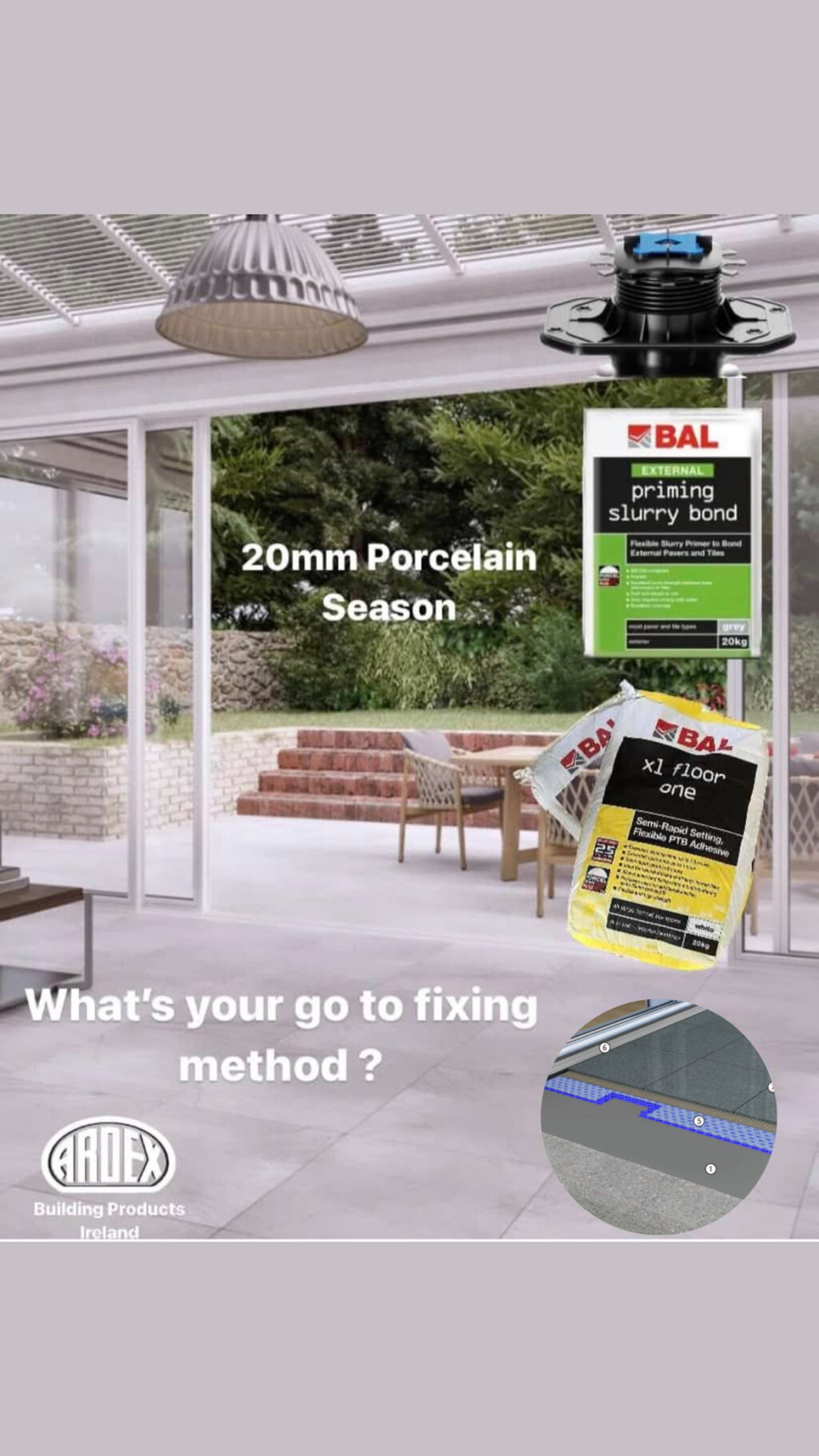
High-performance flexible adhesives such as ARDEX X 325 or BAL XL Floor One (from BAL Adhesives Limited) are applied using a large-format notched trowel, with each tile back-buttered to achieve near-100% coverage. This eliminates voids beneath the tile, ensuring excellent load distribution, frost resistance, and durability – ideal for patios, terraces, and high-traffic outdoor areas.
2. Traditional Wet Bed Installation – Slurry Primer Fresh-on-Fresh
The solid bed method remains a time-tested approach, particularly suited to ground-supported external installations. A cement-based slurry primer is applied to the back of each porcelain tile before placing it fresh-on-fresh into a prepared sand and cement mortar bed.
This slurry bond creates both a mechanical and chemical key between the low-porosity porcelain and mortar, dramatically reducing the risk of debonding. Installed over a well-compacted sub-base with appropriate drainage falls, this system delivers a strong, traditional construction build-up with excellent long-term performance.
3. Raised Installation – Adjustable Pedestal Systems
Where projects require drainage management, service access, or significant height build-up, raised pedestal systems offer a highly flexible alternative. Systems such as TerraMaxx pedestals from Gutjahr Systems GmbH support the tiles without bonding them to the substrate.
These pedestals are available in heights ranging from approximately 36mm up to 500mm, allowing complete flexibility in design. This creates a free-draining surface while allowing services to be concealed beneath. Particularly suited to balconies, roof terraces, and podium decks, pedestal installations allow rapid installation, precise levelling, and straightforward future maintenance access.
4. Floating Installation – Drainage & Decoupling Mat Systems
An increasingly popular modern solution is the use of drainage and decoupling mats such as KP Drain Plus. These systems can be loose-laid onto a smooth, level substrate, providing effective water management and isolating the tiled finish from substrate movement.
Tiles are then bonded above the mat using suitable ARDEX or BAL adhesives, combining the strength of a bonded system with enhanced moisture control and stress relief – an ideal approach for exposed terraces subject to Ireland’s variable climate.
Choosing the Right MethodEach of these systems offers distinct advantages, and the correct specification depends on factors such as substrate condition, loading requirements, drainage design, and accessibility needs. By selecting the appropriate ARDEX-compatible installation method, designers and contractors can ensure durable, low-maintenance external tiled surfaces built to perform in demanding environments.
Learn more about our products here: https://www.ardexbuildingproducts.ie/